Making “Half the Stars” by Judy Nahum

When a language dies, there is no funeral. It loses breath, gasping by the generation, until words turn to fossils & unearthing one means hearing the call of an extinct bird. Vanishing-blue. I want to see your smiles more clearly, to know the shuffle of your slippers along a darkened hallway. My tenderest wound is grasping for my own blood, for what is mine & not mine all at once. Would you recognize me as I am? Would you know me in another language? Forgive me this wistful-blue. I am piecing together a map missing entire continents. I am drawing the night sky on my bedroom ceiling, but I can’t remember half the stars.
—Judy Nahum, from “Letter to my Izmirli ancestors”
//
This excerpt is the winning text from our inaugural broadside contest. We opened for submissions for the first time ever last fall, and poems came pouring in! We spent the winter reading and re-reading them, deeply deliberating. I expected to choose a full poem and there were many that could have made a beautiful broadside; but the second half of this poem haunted me until I realized of course, it’s okay to choose a poem that I want to print an excerpt from. I do that all the time. In fact, working with fragments is a core aspect of my artistic practice. I love working from pieces. Piecing together. Re-membering.
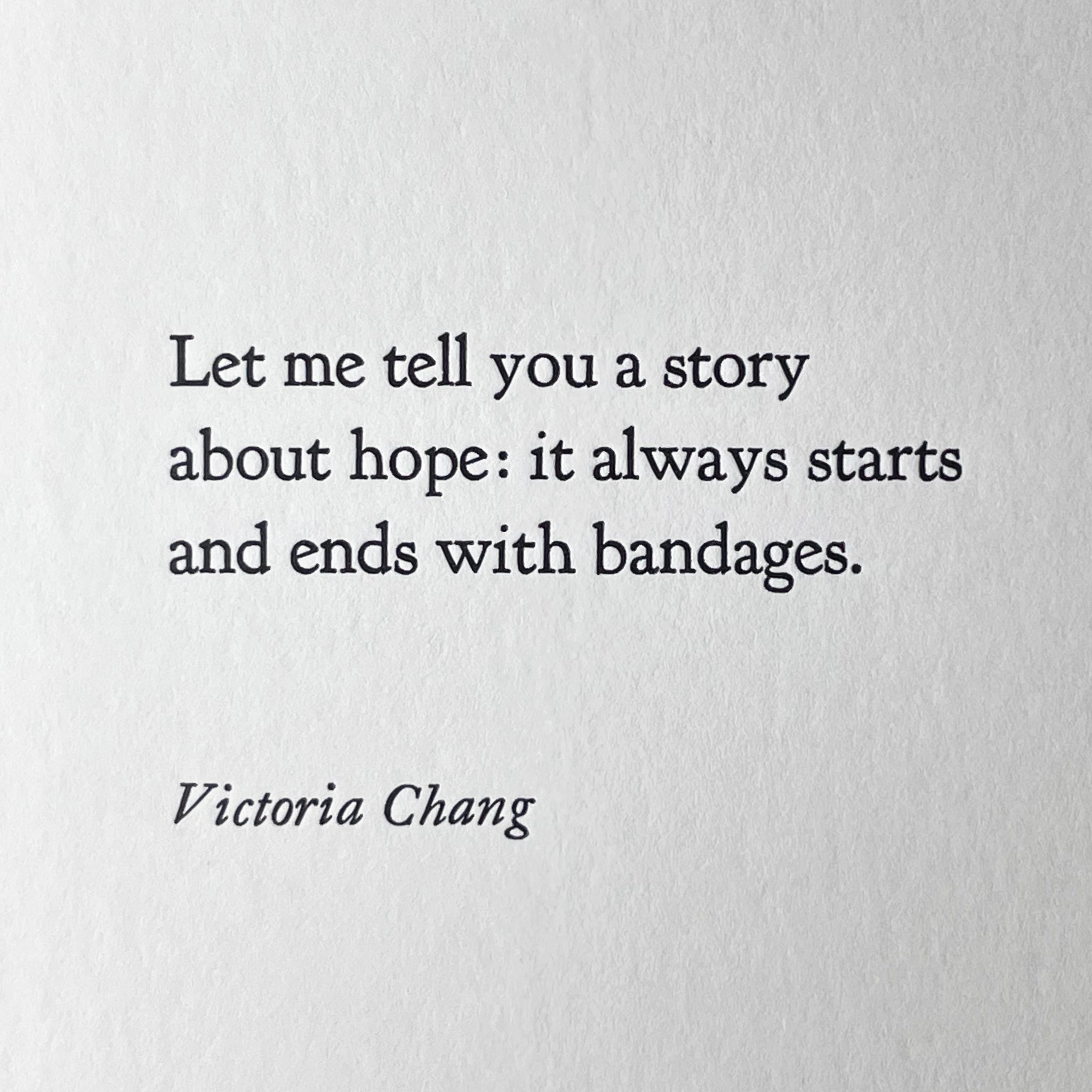
The lines that first got me in Judy’s poem are the two questions toward the end: “Would you recognize me as I am? Would you know me in another language?” The longing and loss inherent in those questions is palpable, and makes me think first of living relatives whom I’ve lost. Family members who don’t speak the same language. To whom I don't speak at all. With whom I can’t, or won’t, relate. It makes me think too of E.J. Koh’s assertion that “They say a person has so unique a set of meanings we ought to be incapable of understanding each other, yet we speak and teach as if by magic.”

When does a language die? Our unique set of meanings dies with each of us, but we trust in the continuation of our collective set. Language is not static. It is constantly making and re-making itself, living so long as we’re speaking. I think the technical definition of language death has to do with the death of its speakers, which makes sense. How can a language live if it isn’t flowing from mouth to ear to mouth? These days, we lose our generations quickly. Can you name more than one of your great-great grandparents off the top of your head? How far back do you have to go before they’re speaking a language you don’t know?
I first intended to begin the excerpt at this line: “My tenderest wound is grasping for my own blood, for what is mine & not mine all at once.” I’m not sure if it’s the wound that is grasping, or if the wound is the grasping, or both. It caught me with its intense vulnerability anchored in tension: "mine & not mine, all at once." Makes another line echo up from my teenagerhood, a stark uncle’s warning: “even though you will often not know what is happening, you are responsible for whatever transpires.”

I feel like all we ever have, at best, is half the story. Whether it’s our parents doing the telling, our grandparents, or our great-grandparents if we’re lucky. But it’s a beautiful thing to listen to what they are saying. The stories are all we have in the end, and sometimes not even them. Sometimes it’s only a small bit, an object or a taste or a smell, that swoops us up into a collective memory we have no words for.
//
Here is the full poem, with a note from the author following:
Letter to my Izmirli ancestors
Be patient with me, there is so much I don’t know & must re-imagine. For 500 years, you made your home between layers of blue — Aegean-blue, kilim-woven-blue, evil-eye- blue. Diaspora-blue. You learned to braid your languages, to dip phrases in and out of conversation, kaminando i avlando, like biscuits into bitter coffee straight from the cezve. What I do know — the gold bracelets I’ve inherited, their perfect, clinking roundness. How Tante Allegre took them off her own wrist to give my mom, just a year before I was born. The Ottoman coin on a chain whose inscription I will never understand. My dad’s laughter, same as his mother’s. When a language dies, there is no funeral. It loses breath, gasping by the generation, until words turn to fossils & unearthing one means hearing the call of an extinct bird. Vanishing-blue. I want to see your smiles more clearly, to know the shuffle of your slippers along a darkened hallway. My tenderest wound is grasping for my own blood, for what is mine & not mine all at once. Would you recognize me as I am? Would you know me in another language? Forgive me this wistful-blue. I am piecing together a map missing entire continents. I am drawing the night sky on my bedroom ceiling, but I can’t remember half the stars.
Izmirli is a Turkish word that refers to the people of Izmir, Turkey. This poem is an expression of longing for the world occupied by my Sephardic Jewish ancestors who lived in Izmir for many generations. It is about the disconnect that results from immigration and assimilation, which can sometimes happen in one short generation, and the way that cultural regeneration can sometimes feel like cobbling together moments, words, and artifacts. This poem is also very much about Ladino or Judeo-Spanish, the ancestral language of Sephardic Jews. Ladino is considered endangered by UNESCO, but it is not actually “dead”; in fact, there are many efforts to celebrate and revive it, such as the Sephardic Studies Digital Collection at the University of Washington.
I owe deep gratitude to Tiana Clark and my peers at the 2025 Juniper Summer Writing Institute, where this poem came to life. And also to my dad, who grew up speaking Ladino at home, and who is always incredibly patient with my never-ending questions about Ladino and Sephardic culture.
—Judy Nahum
//

I picked this poem because I think it’s beautiful. I like the flow, the specificity of the language moving from outside to in, from past to present, and the way it wrestles and ultimately stays with so much not knowing. It makes me think of a long afternoon I spent with Tess Gallagher at her home years ago, the sun’s late rays falling through her tea room while she grilled me on my family history which, admittedly, is full of gripping stories. She said I should write about it. I said, I’m trying. I try. But I can’t. There’s so much I don’t know. And she said, oh, that’s alright. Just make sure at least once a day or so you ask yourself, “What is the Don’t Know doing today?”
What is the Don’t Know doing? To be honest, while I didn’t understand it and still don’t, that question freaked me out. It comes back to me randomly and makes me uneasy. Perhaps a letter would be a good way to start that writing, like Judy’s poem to her ancestors. A letter to all I don’t know.
I love the layers of blue that this poem opens with and then echoes throughout. It gave me an image of torn fabric, thin, see-through. Gauzy and breezy, easily shifting. And what color could you call wistful? Blue, yes of course. But what shade? Utterly faded denim is what came to mind. Fabric whose color has been worn through. I like the idea also of having a tenderest wound — how that implies that not all wounds are equally tender, or at least not at all times. That maybe even, you could have a least-tender wound. One that’s so healed and well-tended it’s a welcome part of yourself.

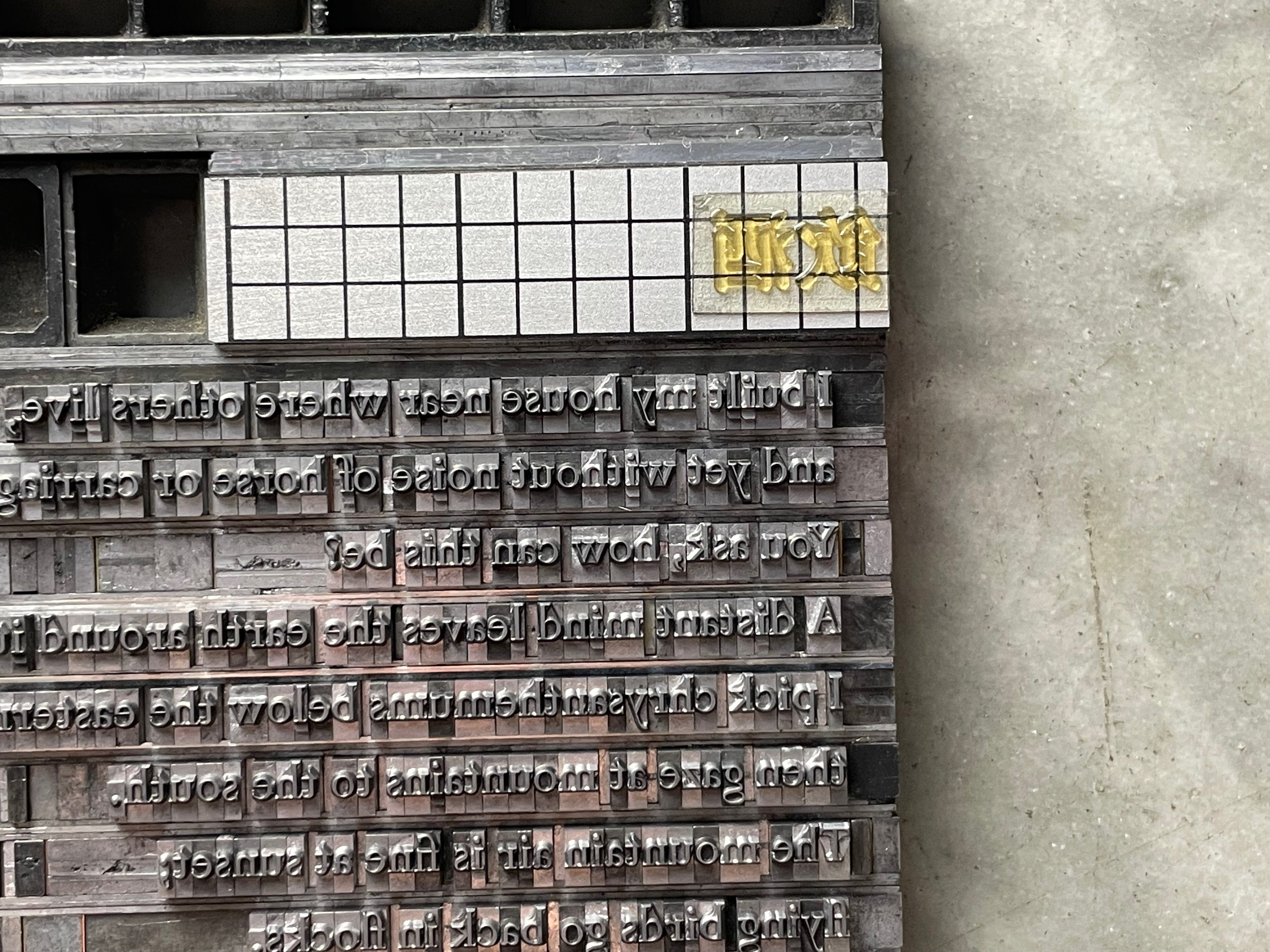
I was thinking about depth with this design, layers upon layers, and also length. I thought of the news too, given the matter-of-factness with which many of the observations in the poem are presented, but also all that's left out when a story is reported. That influenced the typography: I was thinking of a newspaper column. Been a long time since I set a column of justified text and gosh is it challenging. The type is 14pt Caslon. I set the longest line first with regular word spacing (5em is my go to) and chose the setting width based on that, as usual. But then, for each line, I had to add coppers and brasses — half point and one point thick, respectively — evenly distributed throughout the line to get the snug fit to both left and right margins. To my trained eye, some lines look gappy and some tight; it’s a tricky balance to consistently strike. But I love the overall form. It’s such a strong container. And where it landed with the last three words on their own line was the cherry on top. That was unplanned and felt so right, it gave me the title of the piece.

I created the background layers of blue from torn paper, using a simple pressure print technique. I had first imagined the background as a full bleed, covering the entire sheet. But there were some technical constraints that made me play around with keeping some of the sheet white, and it felt a stronger way to drop into the act of reading. When I first proofed the text over the top, I aligned it so the blue line fell between poetry lines. While that was visually interesting I really didn’t like how it split the poem. Too stark. Too half and half. Too disruptive to reading. But a rasp along the edge of the linoleum and a 4 point shift of the text block suddenly softened the transition while echoing the tension I feel in the line that sits right on that line, the “mine & not mine.”
Because it is, in the end, always ours and not ours, right? What we carry from our ancestors, known and unknown. Past and closely present. We hold it all, all the time. Good to wonder about what it is we’re holding, isn’t it? To try to learn each other’s languages.

//
Credits
The poem "Letter to my Izmirli ancestors," by Judy Nahum, was the winner of the inaugural Expedition Press Broadside Contest. Copyright 2026 Judy Nahum.
Big thanks to all who submitted to Expedition's first contest and to our readers and supportive literary community that helped the contest come to be!
//
Link to purchase
Get the print: Half the Stars.